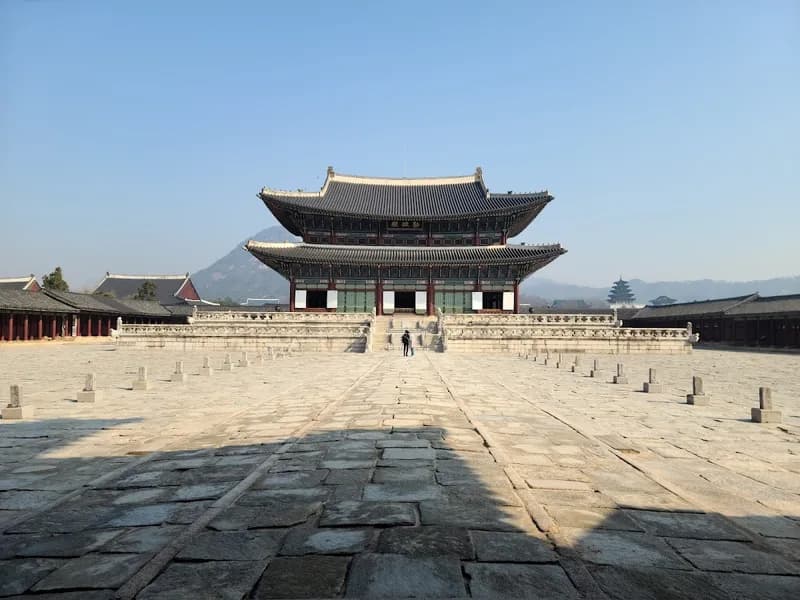
Gyeongbokgung Palace
경복궁
About
Joseon-era royal palace. Catch the guard changing ceremony.
# Gyeongbokgung Palace: Where History Crystallizes Into Architecture Gyeongbokgung Palace stands as the founding monument of the Joseon Dynasty, its name itself—meaning "the new dynasty will enjoy great blessings and prosper"—embedding aspiration into stone and timber. Built in 1395 against the backdrop of Mt. Bugak, the palace embodies the era's highest artistic and technical ambitions, though its trajectory mirrors Korea's turbulent history: burned entirely during the 1592 Imjin War, abandoned for 270 years, then painstakingly reconstructed beginning in 1867. The Japanese colonial period inflicted further damage, yet ongoing restoration work continues reclaiming what was lost. The palace unfolds along a precise south-to-north axis, with the iconic Gwanghwamun gate anchoring the complex. Its three arched openings include a central passage reserved for the king alone. Walking deeper into the grounds reveals structures like Gyeonghoeru Pavilion, originally designed for royal banquets and diplomatic receptions before later kings redirected it toward elaborate entertainment—a physical reminder that space itself can be rewritten by those who command it. The decorative paintings adorning wooden buildings, called Dancheong, deserve particular attention. Far from mere ornament, these intricate patterns of lotus flowers and clouds both protect timber from weather and insects while signifying dignity and fortune. Each motif represents a deliberate interplay between nature and authority, crafted in balanced, repetitive sequences that guided the eye toward meaning. For visitors seeking quietude, arrive just after the 9 AM opening or visit within an hour of closing, before group tourists converge. The Changing of the Royal Guard ceremony—held at 10 AM and 2 PM daily except Tuesdays—provides a tangible link to ceremonial life. The adjacent National Palace Museum preserves Joseon and Korean imperial artifacts with scholarly depth, transforming static objects into windows onto vanished courts. At 3,000 won for most adults (free for those in hanbok), Gyeongbokgung remains an essential encounter with how power, aesthetics, and survival intersect across five centuries.
Details
- Gyeongbokgung Station (Line 3) / Gwanghwamun Station (Line 5)
Opening hours
- Sunday
- 09:00–17:00
- Monday
- 09:00–17:00
- Tuesday
- Closed
- Wednesday
- 09:00–17:00
- Thursday
- 09:00–17:00
- Friday
- 09:00–17:00
- Saturday
- 09:00–17:00