Moksal (Pork Collar · 목살): what it is and how to order it in Korea
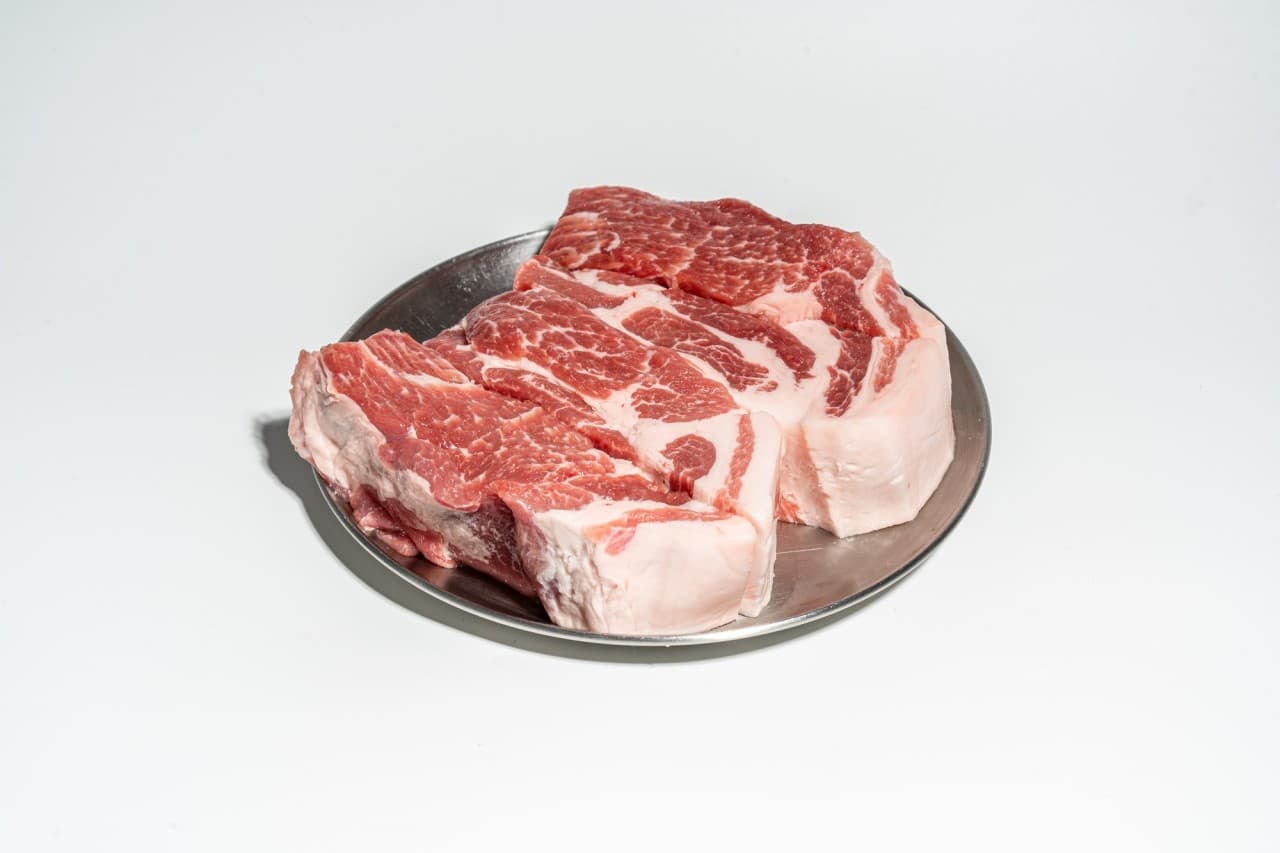
Pork neck and shoulder, leaner than belly and cut thick, so it chews rather than melts. Listed beside samgyeopsal on nearly every Korean grill menu, usually at the same price.
Say it to order
목살 이인분 주세요
Moksal i-inbun juseyo
Quick facts
How to eat it
Thicker than belly, so give it longer on the grill and cut it down with the scissors. Good with salt-and-sesame-oil dip rather than ssamjang if you want to taste the meat.
Do
- Let the server or an elder cut and place the first pieces on the grill.
- Pour drinks for elders with both hands.
Don’t
- Don't flip the meat repeatedly; leave it alone until it releases from the grill.
- Don't start eating before the eldest at the table has taken the first bite.
Local tips
- Ask for the grill to be turned to medium heat so the fat renders without burning.
- Eat a slice with a piece of raw garlic and a dab of ssamjang for the classic combination.
- Order a bowl of doenjang stew or fried rice at the end to finish the meal.
Goes with
- Lettuce wraps
- Ssamjang
- Garlic
- Kimchi
- Rice
- Soju
- Beer
Where to try it in Seoul
Questions
- How do you order Moksal (Pork Collar) in Korean?
- Say “목살 이인분 주세요” (Moksal i-inbun juseyo).
- Is Moksal (Pork Collar) spicy?
- No. Moksal (Pork Collar) isn’t spicy.
- How much does Moksal (Pork Collar) cost in Korea?
- Usually ₩15,000–20,000.
- How do you eat Moksal (Pork Collar)?
- Thicker than belly, so give it longer on the grill and cut it down with the scissors. Good with salt-and-sesame-oil dip rather than ssamjang if you want to taste the meat.
Find Moksal (Pork Collar) near you
Jinjja shows real local places, what to order and how to say it — in your language.